¡Bienvenidos Familia!
Welcome Family!
When you start learning Spanish, it is very useful to know the names of common objects in the house. This vocabulary helps you talk about your home, describe rooms and use simple phrases in daily conversations.
Cuando empiezas a aprender español, es muy útil conocer los nombres de los objetos comunes de la casa. Este vocabulario te ayuda a hablar de tu hogar, describir habitaciones y usar frases sencillas en conversaciones del día a día.
1. Rooms in the house
1. Las habitaciones de la casa
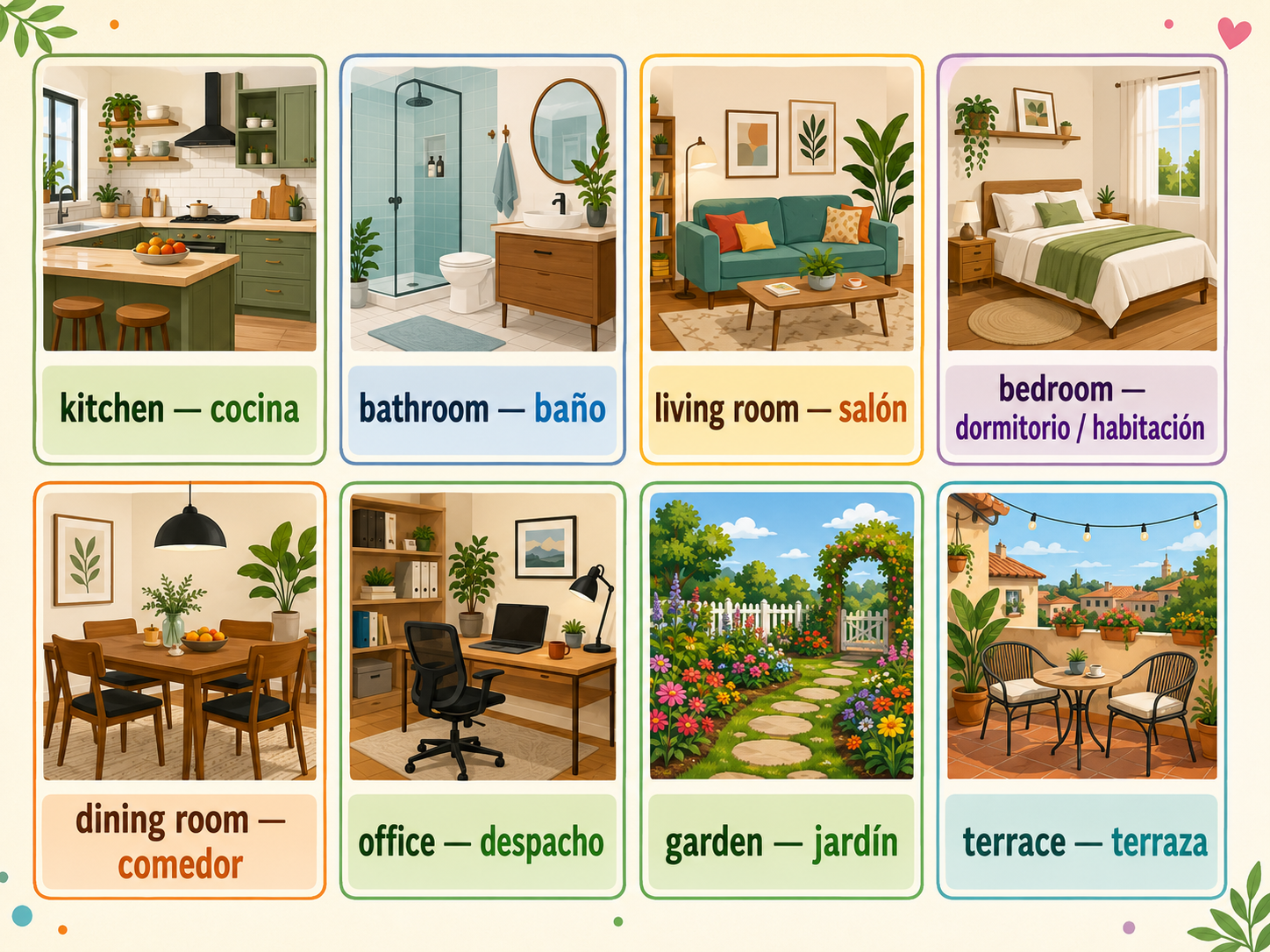
Here are some basic rooms in Spanish:
Aquí tienes algunas habitaciones básicas en español:
Examples:
Ejemplos:
-
- La cocina es grande.
The kitchen is big. - El baño es pequeño.
The bathroom is small. - El salón es muy bonito.
The living room is very nice.
- La cocina es grande.
2. Common objects in the house
2. Objetos comunes de la casa
These are some common objects you can find at home:
Estos son algunos objetos comunes que puedes encontrar en casa: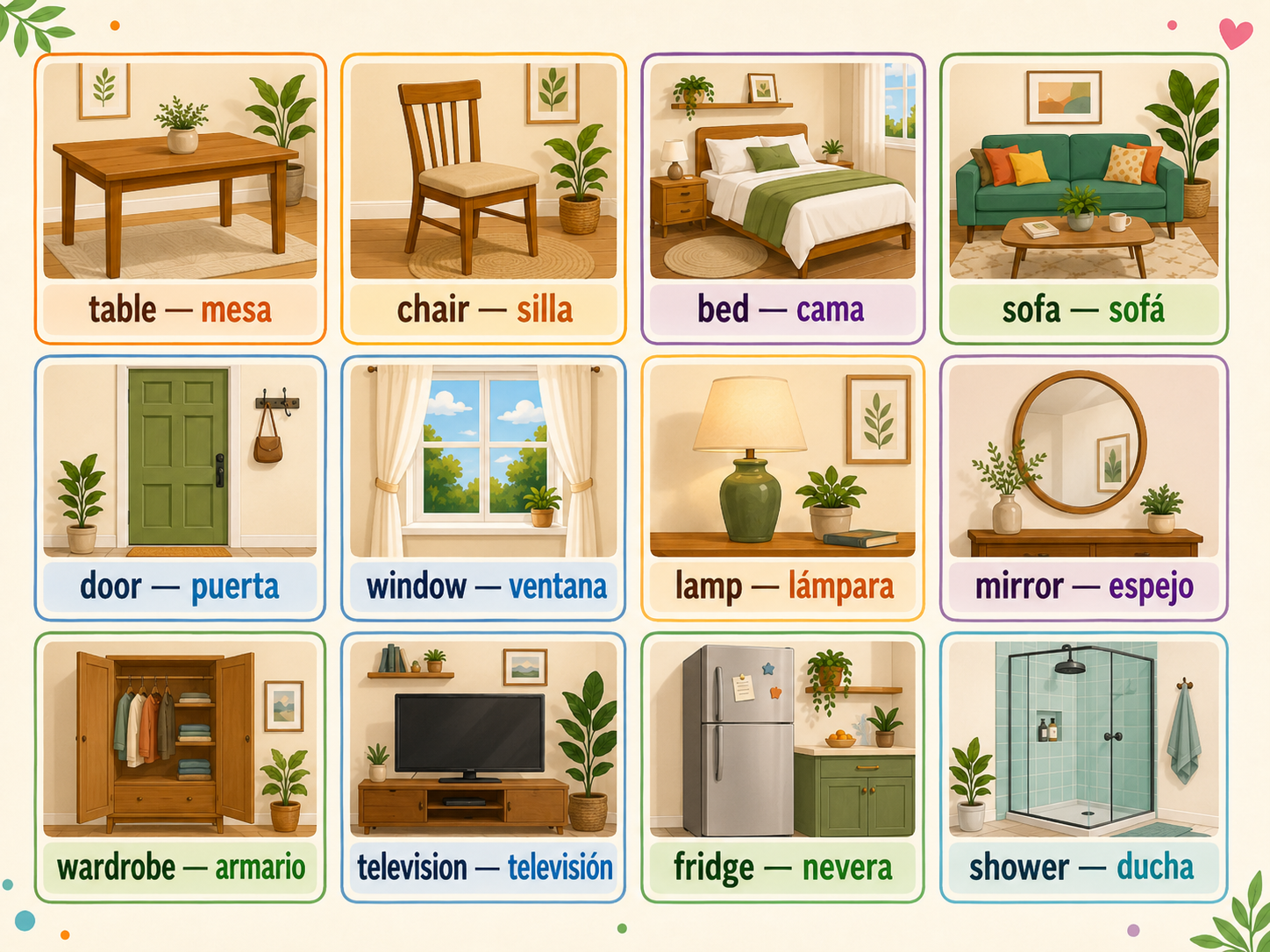
Examples:
Ejemplos:
-
- Tengo una mesa en la cocina.
I have a table in the kitchen. - Hay una cama en el dormitorio.
There is a bed in the bedroom. - El sofá está en el salón.
The sofa is in the living room.
- Tengo una mesa en la cocina.
3. Using “hay” in Spanish
3. Usar “hay” en español
In Spanish, we use hay to say there is or there are.
En español, usamos hay para decir there is o there are.
Examples:
Ejemplos:
-
- Hay una mesa.
There is a table. - Hay dos sillas.
There are two chairs. - Hay una televisión en el salón.
There is a television in the living room. - Hay una nevera en la cocina.
There is a fridge in the kitchen.
- Hay una mesa.
Important:
Importante:
-
- In Spanish, hay does not change for singular or plural.
- En español, hay no cambia para singular o plural.
- Hay una silla.
There is one chair. - Hay cuatro sillas.
There are four chairs.
4. Using “estar en”
4. Usar “estar en”
We use estar en to say where something is.
Usamos estar en para decir dónde está algo.
Examples:
Ejemplos:
-
- La cama está en el dormitorio.
The bed is in the bedroom. - La mesa está en la cocina.
The table is in the kitchen. - El espejo está en el baño.
The mirror is in the bathroom. - La televisión está en el salón.
The television is in the living room.
- La cama está en el dormitorio.
5. Using “tener”
5. Usar “tener”
We use tener to talk about things we have.
Usamos tener para hablar de las cosas que tenemos.
Examples:
Ejemplos:
-
- Tengo una casa pequeña.
I have a small house. - Tengo una mesa en la cocina.
I have a table in the kitchen. - Tengo una lámpara en el dormitorio.
I have a lamp in the bedroom. - Tengo dos sillas en el comedor.
I have two chairs in the dining room.
- Tengo una casa pequeña.
6. Useful beginner questions
6. Preguntas útiles para principiantes
Here are some useful questions:
Aquí tienes algunas preguntas útiles:
¿Qué hay en la cocina?
What is there in the kitchen?
¿Dónde está la cama?
Where is the bed?
¿Tienes jardín?
Do you have a garden?
¿Tienes una televisión en el salón?
Do you have a television in the living room?
¿La casa es grande o pequeña?
Is the house big or small?
7. Useful beginner phrases
7. Frases útiles para principiantes
-
- Mi casa es pequeña.
My house is small. - Mi casa es grande.
My house is big. - Hay una mesa en la cocina.
There is a table in the kitchen. - La cama está en el dormitorio.
The bed is in the bedroom. - Tengo un sofá en el salón.
I have a sofa in the living room. - El baño tiene una ducha.
The bathroom has a shower. - La ventana está en el dormitorio.
The window is in the bedroom.
- Mi casa es pequeña.
Mini summary
Mini resumen
Learning objects in the house is very useful for beginners. With words like mesa, silla, cama, sofá and ventana, you can start describing your home in Spanish.
Aprender los objetos de la casa es muy útil para principiantes. Con palabras como mesa, silla, cama, sofá y ventana, puedes empezar a describir tu casa en español.
You can also use simple structures like hay, estar en and tener to create useful sentences.
También puedes usar estructuras sencillas como hay, estar en y tener para crear frases útiles.
Final Activity
Actividad final
Complete the sentences with the correct word.
Completa las frases con la palabra correcta.
¿Quieres aprender español de una forma práctica y natural?
Would you like to learn Spanish in a practical and natural way?
Si quieres mejorar tu español con contenidos reales, actividades, vocabulario y apoyo profesional, te invitamos a formar parte de nuestro club.
If you want to improve your Spanish through authentic content, activities, vocabulary and professional support, we invite you to join our club.
Apúntate aquí:
https://adventurelearningespanol.com/register
We would love to help you speak Spanish with greater confidence and naturalness.
Nos encantará ayudarte a hablar español con más confianza y naturalidad.