¡Bienvenidos Familia!
Welcome Family!
La Semana Santa en España es una de las celebraciones más importantes del año y también una de las más representativas de la cultura española. Es un tema muy útil porque permite aprender vocabulario real, conocer costumbres del país y entender mejor cómo se mezclan la tradición, la religión, el arte y la vida social.
Easter in Spain is one of the most important celebrations of the year and also one of the most representative parts of Spanish culture. It is a very useful topic because it helps them learn real vocabulary, discover local customs, and better understand how tradition, religion, art, and social life come together.
¿Qué es la Semana Santa en España?
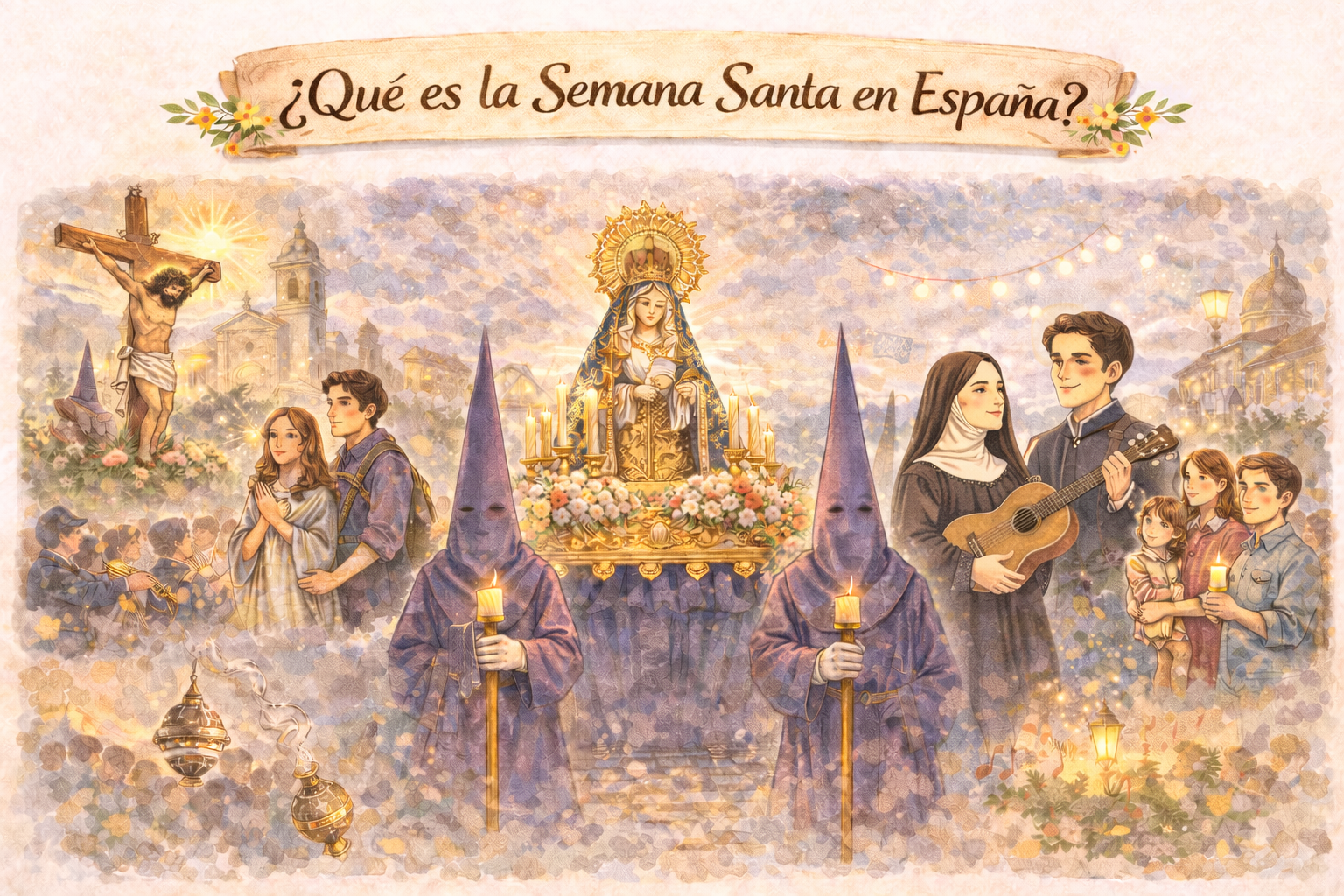
La Semana Santa es la celebración que recuerda los últimos días de la vida de Jesús y se vive en muchas ciudades y pueblos de España. Aunque su origen es religioso, en la actualidad también tiene una gran importancia cultural y social. Durante esta semana, las calles se llenan de personas, música, velas, incienso y procesiones. Muchas familias salen a ver los recorridos cada año, y para muchas ciudades esta tradición forma parte de su identidad.
Easter is the celebration that remembers the last days of Jesus’s life and it takes place in many cities and towns across Spain. Although it has a religious origin, today it also has great cultural and social importance. During this week, the streets fill with people, music, candles, incense, and processions. Many families go out to watch the routes every year, and for many cities this tradition is part of their identity.
Cómo se vive la Semana Santa en las calles
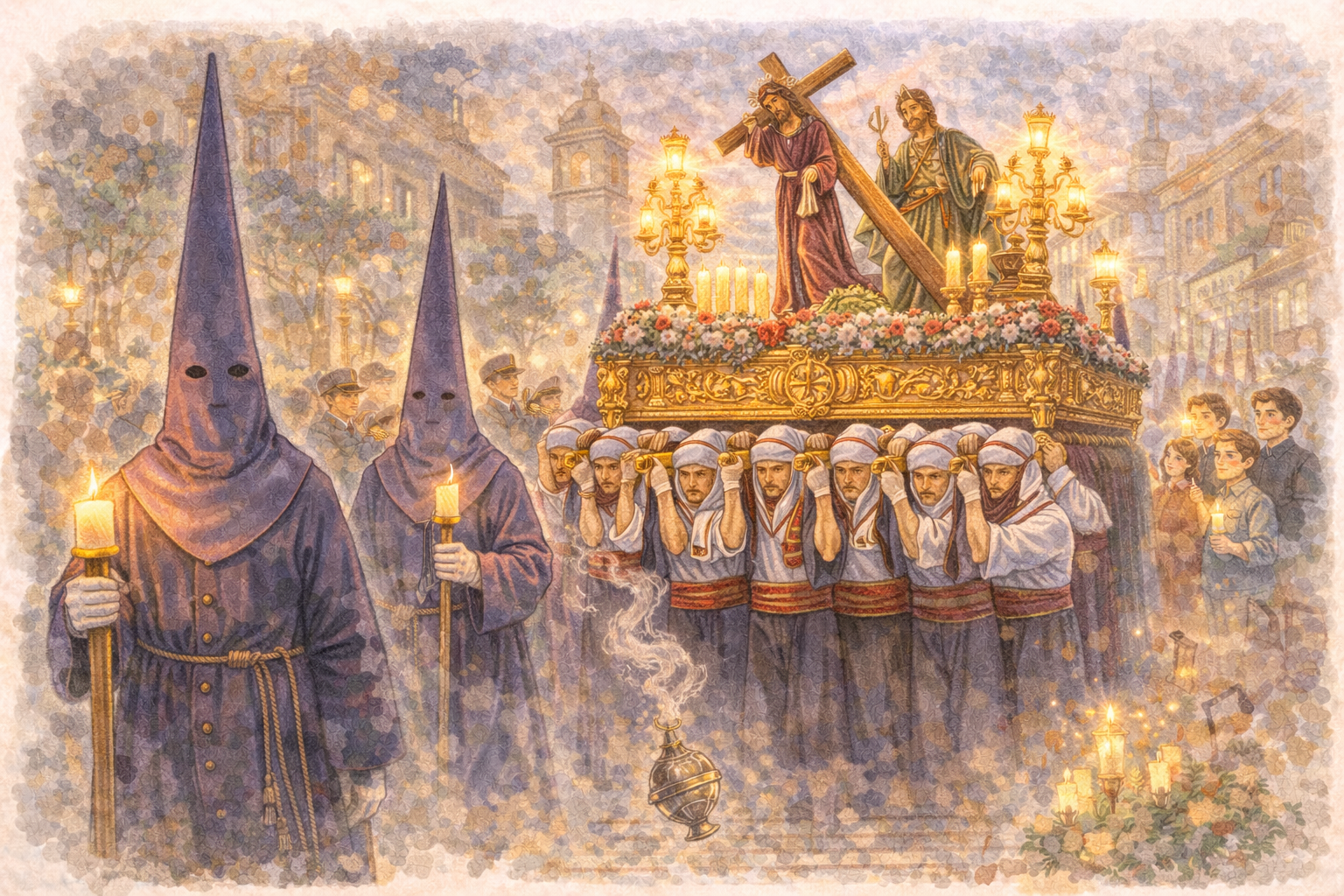
Uno de los elementos más conocidos de la Semana Santa en España son las procesiones. En ellas participan las cofradías o hermandades, que son asociaciones que organizan los recorridos y cuidan sus tradiciones. Durante la procesión aparecen los nazarenos, que caminan con túnica y capirote, y también los costaleros, que llevan los pasos. Los pasos son plataformas con imágenes religiosas que muchas veces tienen un gran valor artístico. Todo esto crea una atmósfera muy especial, donde se mezclan el silencio, la emoción, la música y el respeto.
One of the best-known elements of Easter in Spain is the processions. In them, the brotherhoods take part; these are associations that organize the routes and preserve their traditions. During the procession, there are nazarenos, who walk wearing tunics and pointed hoods, and also costaleros, who carry the pasos. The pasos are platforms with religious images that often have great artistic value. All of this creates a very special atmosphere where silence, emotion, music, and respect come together.
Diferencias entre ciudades de España
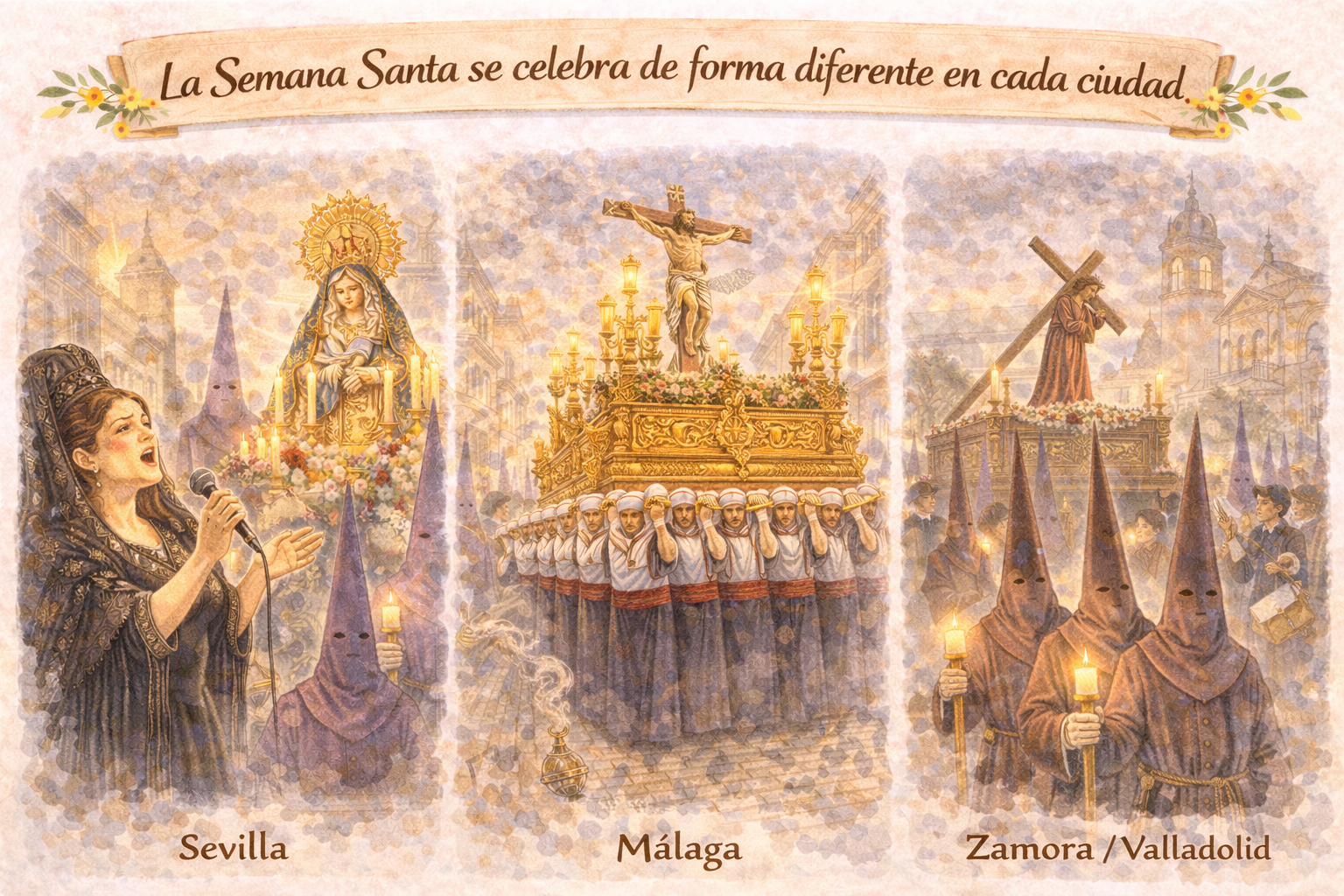
Una de las cosas más interesantes es que la Semana Santa no se celebra de la misma manera en toda España. Cada ciudad tiene su estilo propio. En Sevilla, por ejemplo, la celebración es muy intensa y muy conocida por sus hermandades, sus saetas y la emoción de sus procesiones. En Málaga destacan los grandes tronos y un ambiente más visual y espectacular. En otras ciudades, c
omo Zamora o Valladolid, la Semana Santa suele ser más seria, silenciosa y solemne. Esta variedad hace que la Semana Santa española sea muy rica desde el punto de vista cultural.
One of the most interesting things is that Easter is not celebrated in the same way all over Spain. Each city has its own style. In Seville, for example, the celebration is very intense and especially known for its brotherhoods, saetas, and emotional processions. In Málaga, the large tronos stand out, along with a more visual and spectacular atmosphere. In other cities, such as Zamora or Valladolid, Easter is usually more serious, quiet, and solemn. This variety makes Spanish Easter very rich from a cultural point of view.
Tradición, arte y emoción
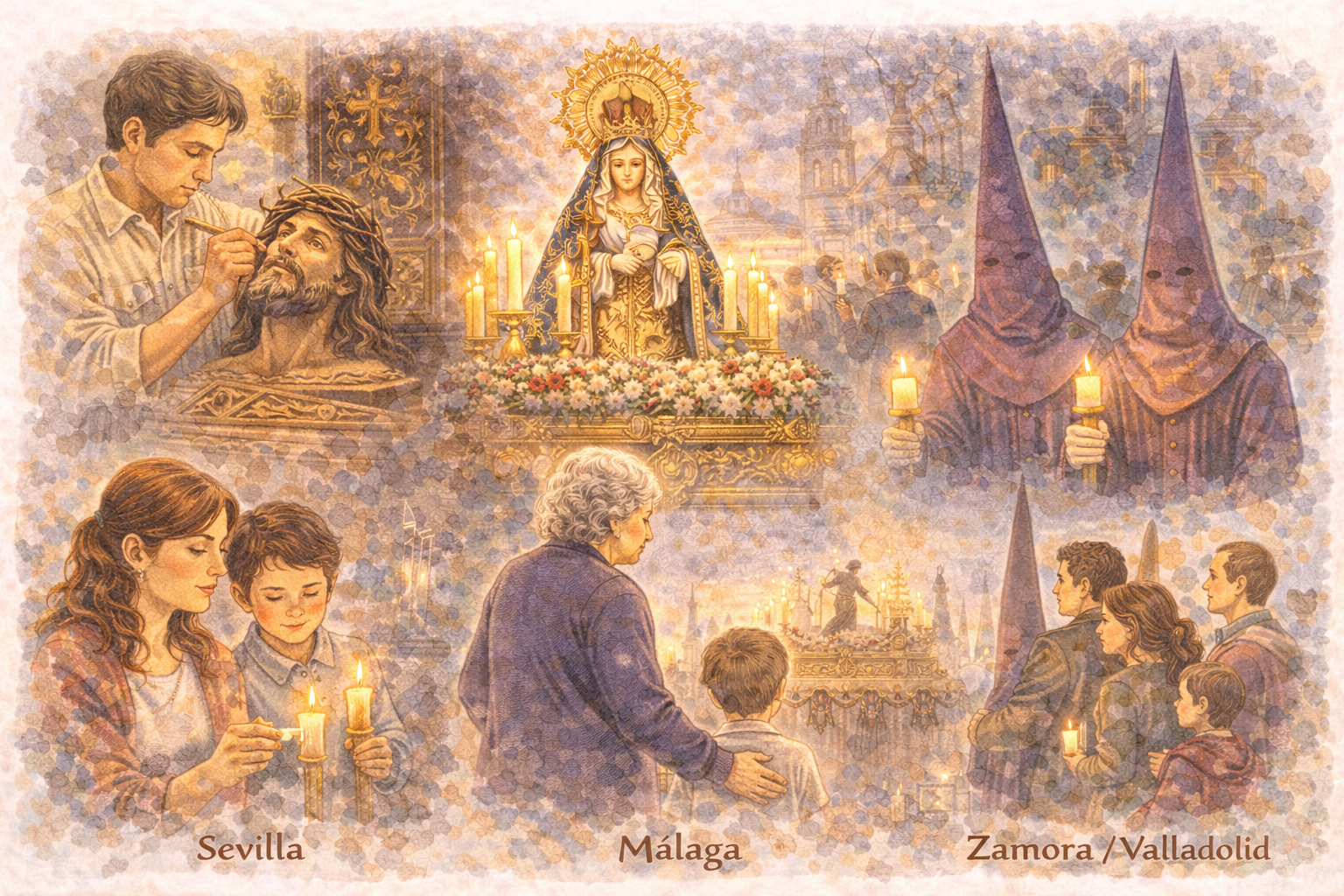
La Semana Santa en España no es solo una celebración religiosa. También es una muestra de arte, historia y patrimonio. Muchas imágenes religiosas, bordados, esculturas y adornos forman parte de una tradición artística muy antigua. Además, para muchas
personas, estos días tienen un valor emocional muy fuerte porque recuerdan celebraciones familiares, costumbres de la infancia o momentos importantes compartidos con su comunidad. Por eso, la Semana Santa sigue siendo una tradición muy viva en la España actual.
Easter in Spain is not only a religious celebration. It is also an expression of art, history, and heritage. Many religious images, embroidery pieces, sculptures, and decorations are part of a very old artistic tradition. In addition, for many people, these days have strong emotional value because they bring back family celebrations, childhood customs, or important moments shared with their community. For this reason, Easter continues to be a very living tradition in Spain today.
Gastronomía típica de Semana Santa
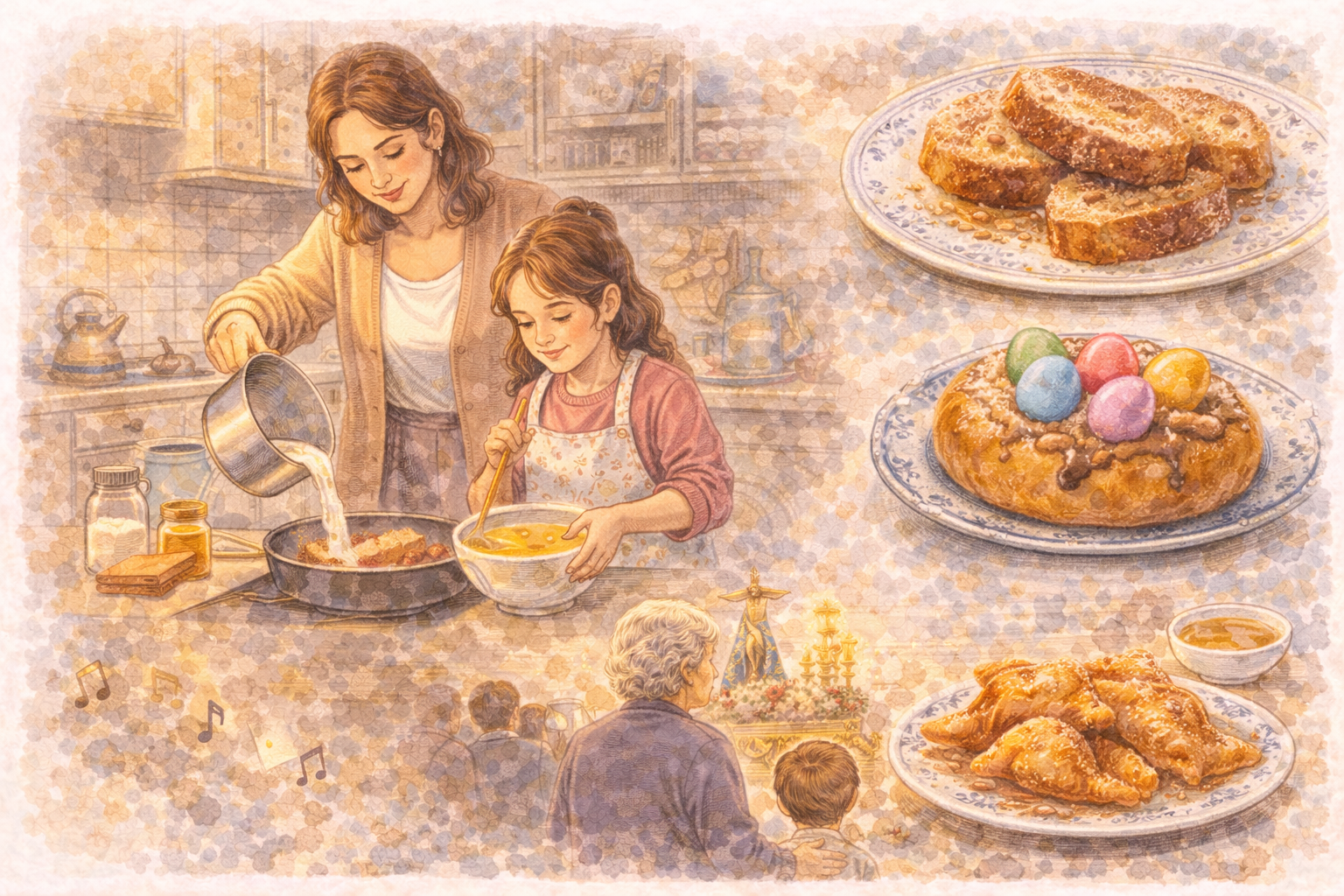 La Semana Santa también se vive a través de la comida. En muchas casas españolas es típico preparar dulces tradicionales durante estas fechas. El más conocido es la torrija, un postre hecho normalmente con pan, leche, azúcar, canela y huevo. En algunas regiones también son típicos otros dulces, como la mona de Pascua o los pestiños. Esto demuestra que la Semana Santa en España no solo se celebra en la calle, sino también en casa y alrededor de la mesa.
Easter is also experienced through food. In many Spanish homes, it is common to prepare traditional sweets during these dates. The best-known one is the torrija, a dessert usually made with bread, milk, sugar, cinnamon, and egg. In some regions, other sweets are also typical, such as mona de Pascua or pestiños. This shows that Easter in Spain is not only celebrated in the street, but also at home and around the table.
Cierre
La Semana Santa en España es mucho más que una tradición religiosa. Es una celebración que une historia, cultura, arte, gastronomía y emoción. Por eso, aprender sobre este tema ayuda a entender mejor la sociedad y las costumbres españolas.
Easter in Spain is much more than a religious tradition. It is a celebration that brings together history, culture, art, gastronomy, and emotion. For that reason, learning about this topic helps understand Spanish society and customs. If you want to learn Spanish in a more cultural and practical way.
Vocabulario importante | Important vocabulary
Semana Santa = Holy Week= Easter
Ejemplo: La Semana Santa es una celebración muy importante en España.
Example: Easter is a very important celebration in Spain.
Procesión = Procession
Ejemplo: Mucha gente sale a la calle para ver la procesión.
Example: Many people go out into the street to watch the procession.
Cofradía = Brotherhood
Ejemplo: La cofradía organiza el recorrido de la procesión.
Example: The brotherhood organizes the route of the procession.
Hermandad = Religious brotherhood
Ejemplo: Cada hermandad tiene sus propias tradiciones.
Example: Each brotherhood has its own traditions.
Nazareno = Penitent wearing a tunic and hood
Ejemplo: Los nazarenos caminan en silencio con velas.
Example: The nazarenos walk in silence with candles.
Paso = Float / religious platform
Ejemplo: El paso lleva una imagen religiosa muy valiosa.
Example: The float carries a very valuable religious image.
Costalero = Bearer of the float
Ejemplo: Los costaleros llevan el paso sobre los hombros.
Example: The bearers carry the float on their shoulders.
Capirote = Pointed hood
Ejemplo: El capirote es una parte tradicional de la ropa del nazareno.
Example: The pointed hood is a traditional part of the nazareno’s clothing.
Saeta = Traditional Easter song
Ejemplo: Durante la procesión, una mujer cantó una saeta.
Example: During the procession, a woman sang a saeta.
Incienso = Incense
Ejemplo: El incienso crea un ambiente muy especial en la calle.
Example: Incense creates a very special atmosphere in the street.
Torrija = Traditional Easter sweet
Ejemplo: Mi abuela prepara torrijas todos los años en Semana Santa.
Example: My grandmother makes torrijas every year during Easter .
Trono = Large float
Ejemplo: En Málaga, los tronos son muy famosos.
Example: In Málaga, the large floats are very famous.
https://www.youtube.com/watch?v=dnZ3fU8dEww&t=6s